
 Bowen Craggs point out the great new approach that the British Library have taken to their annual report – the inclusion of video profiles of their executive team in the corporate governance section, discussing the Library. The chairman and chief executive have separate pages, each with several more video clips on. The video profiles for the management team all come with transcripts and biographies.
[Read more…] about Annual Reports: the new-look British Library
The Revolution In Corporate Training
Talent management is top on the lists of many CEO surveys.
Today’s workforce issues have the potential to impact business performance in the coming years, according to Deloitte Consulting LLP’s recent survey on talent management strategies. Almost three quarters (72 percent) of companies surveyed said they are concerned that the inadequate skills of incoming workers will negatively affect their bottom line. 2005 Talent Management Strategies Survey
As it is stated in Key Trends in Human Capital Report of Saratoga Institute, that in order to stay ahead in the competition, Organizations must rely on its people’s capabilities. In other words, Organizations have long known that they must have the best capable people in order to succeed in the competitive and increasingly complex global economy. Now, there is also awareness that Organizations must approach talent as a critical resource that must be managed in order to achieve the best possible business results and positioning over competitors.
Generation Y Weighs in on Green Brands
 Two buzz topics – Gen Y and green brands. Put them together and you get an interesting list of brands that the sought after 20-something audience likes and thinks are actually making positive efforts to help the environment.
In a study conducted by Outlaw Consulting, 100 Gen Yers living in New York, Los Angeles, San Fransisco and Miami were surveyed and asked which brands were their favorite “green brands” and why. The results showed the following:
Good Corporate Governance – Ethics Hotlines, But…
BusinessWeek published its Best Corporate Practices in January. I noted with some interest that the #6 best practice was an Ethics Hotline.
All employers talk about ethics, but the ones who provide a way to report misdeeds are the ones most likely to catch problems. Confidential ethics hotlines allow employees to anonymously report bad actors without taking their chances on the dreaded “chain of command.”
This has implications for Corporate Governance.
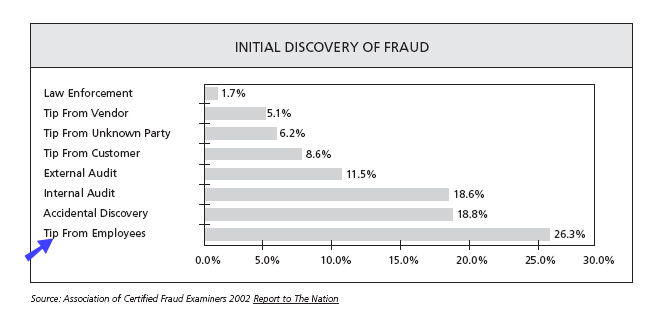
Most discoveries of fraud are by employees. Since Sarbanes-Oxley there has been much interest in Ethics Hotlines. You might think that there would be an increased employee use of these Hotlines. Well no, according to the Ethics Resource Centers’ 2007 NATIONAL BUSINESS ETHICS SURVEY, employees seem to be reluctant to use these Hotlines.
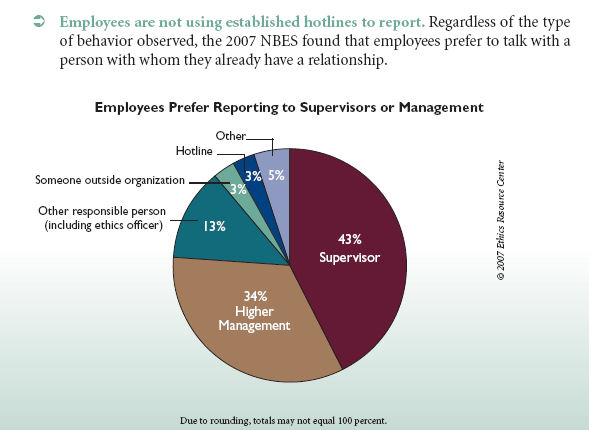
Reasons why employees avoid hotlines include cultural taboos on “snitching” and lack of awareness. However the main reason is fear of retaliation. Even when the hotline is outsourced, there might still be the fear that anonymity cannot be completely guaranteed.
The key learning is that Ethics Hotlines must be viewed as one alternative in a menu of practices to report ethics violations. Companies should not think that once a hotline is in place that nothing else needs to be done.
Brands Get Noticed with Microsoft Live Search Cashback Program
 In a weak economy, consumers are looking for deals. There are many websites dedicated to providing coupon and discount codes to frugal shoppers, but did you know Microsoft Live Search jumped on the discount bandwagon earlier this year with the Microsoft Live Search cashback program?
The initial purpose of the Microsoft Live Search cashback program was to boost Microsoft’s position in the online search market as well as to make some extra money for Microsoft. While it’s unknown if Microsoft has reached either of those goals, new data released by Microsoft does show that the Microsoft Live Search cashback program certainly helps advertisers give their brands a boost at a time when consumers want to save money and retail sales are down industry-wide.
According to The Register, eBay has increased its paid search ROI by 50% using the Microsoft Live Search cashback program and ShoeMall.com has seen an increase of 6-times its previous ROI. Microsoft Live Search claims that 4.5 million consumers use Microsoft Live Search to conduct over 68 million product or brand searches each month. That’s a lot of targeted exposure for an ad!
Microsoft also claims (via their own study with comScore in 2008) that, “Live Search referred almost 12% of all U.S. commercial online transactions and about 13% of all U.S. online spending among key retail categories in the second quarter.”
No one knows how accurate that claim is since Microsoft spearheaded the comScore research, but cashback search does seem like a viable brand marketing option that can easily be incorporated into a brand marketing plan. What do you think?
Image: Flickr
Techniques for enticing the green investor
How can you persuade the green investor to invest in your company, if your environmental credentials are looking rather weak?
Some industries, by their very nature, are going to do more harm to the environment than others. Companies working in consumer services rather than in basic materials are bound to find it easier to ‘go green’, and to target the green investor.

But how picky should the green investor be?
Is it better for the green money to go to the company who is already performing well, and for whom the percentage improvement possible is relatively tiny, or to go to the company who has performed badly in the past, but who is making huge improvements?
Wouldn’t it better for us all, in the long run, to support those companies in the more harmful – but essential – sectors who are doing the most to improve?
Improving the performance of those companies who currently do the most damage to the environment, and rewarding those who manage to make the most improvement each year, will surely make a bigger difference, overall, than rewarding those whose industry has a relatively light footprint in the first place.
We need assessment techniques that show us not only how good/bad each company’s performance is on a number of different measures, but also how much that performance has changed over time. We need to see the trend for each company, and, ideally, to be able to compare this to the performance of other companies.
 Some companies make it easy to see how their performance in this area has changed over time, such as BP, who provide 5-year data for visitors to review. It would be great if we could see the same measures on other sites for comparison purposes.
How is CSR performance measured?
There are several major CSR indices, awards, and other methods of assessing a company’s CSR performance, including:
- Dow Jones sustainability index
- FTSE4Good index
- Global Reporting Index (GRI)
- BiTC award
- CSR Network’s Accountability Rating.
All these are wonderful tools and techniques for reporting and rewarding companies who work hard at CSR. Many companies are signed up to one or more, and some have won awards.
If your company hasn’t considered any of the above – why not think about it now? There are resources available to help on each of the sites above.
However, some companies are excluded by their very nature from some of the above. The FTSE4Good Index, for instance, excludes tobacco companies, weapons companies, and those working in the nuclear industry.
What can be done to support these companies in their efforts to improve?
What can be done to encourage those companies who have no interest in it to improve their performances in CSR?
What are the benefits in CSR – and in green investment?
There are definite benefits to engaging in CSR activities, and these have been outlined many times (see CSR Network for a summary of the argument for CSR), including:
- reduced cost
- improved productivity and quality
- increased sales
- increased profits
- enhanced reputation
- improved employee recruitment and retention.
These are the arguments that must be used to persuade companies that it is in their own interests to work on CSR.
Once that’s done, though, how can green-inclined investors be persuaded to invest in companies that are currently not-very-green?
I suggest that the answer is explaining:
- that engaging in CSR activity results in enhanced financial performance for the company
- that improvements in CSR in currently poorly performing companies (in CSR terms) could achieve big results environmentally
- that investing in a company with a long way to go in CSR terms but which wishes to improve will therefore achieve big results environmentally (thus benefiting the world) – and, probably, financially as well (thus benefiting the investor).
Crucially, of course, the company must be persuaded into a CSR programme before this will work – but once it has agreed, getting the green investors on board will surely add momentum.
This post is part of Blog Action Day, in which bloggers around the world are discussing environmental issues.