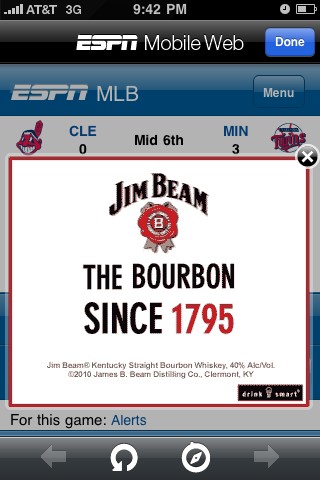
 Mobile advertising is still in its infancy, but trends related to mobile device users’ behaviors and willingness to click on ads show that brands are heading in the right direction by focusing part of their marketing budgets on the mobile audience.
Adobe’s 2012 mobile consumer survey, which was conducted by Keynote Services in March (about the same time as the Adobe Digital Advertising study), found that 40% of mobile users have clicked on ads when using their mobile devices.
Looking at the study results a bit closer, 42% of mobile users have clicked through on mobile web ads and 37% have clicked through on ads in mobile apps. Furthermore, men are more likely to click on in-app ads than women (42% vs. 32%).
Keep in mind, the study reports users who have clicked on mobile ads at some point in time. That doesn’t mean that they click on mobile ads frequently or if they’ve even clicked on a mobile ad more than once. Perhaps more important is the finding that the majority of mobile users have never clicked through on a mobile ad at all.
Mobile commerce is also growing according to the Adobe survey. The report found, “people are most comfortable spending in the range of $1-$250 on their mobile devices (just over 40% overall). When shopping via mobile apps, Android tablet users report the highest satisfaction rate at 88%, followed by the iPad at 71%.”
Additional interesting statistics reported in the study are:
- Facebook is the most popular social networking site for mobile users (88% Facebook vs. 35% Twitter vs. 21% Google+).
- Younger mobile users (ages 8-29) spend the most time using their mobile devices at 3-5 hours per week on mobile websites (28%) and mobile apps (28%). Senior mobile users (ages 50-64) spend the least time using their mobile devices at less than 1 hour per week on both mobile websites and apps.
- Android mobile phones are the most popular across all age groups (58% young, 50% middle-aged, 38% senior).
- Apple’s iPad tablet is the most popular among young (27%) and middle-aged (31%) groups, but the Kindle Fire is most popular among the senior audience.
- QR codes have been scanned in the past three months by a growing number of young (38%) and middle-aged (40%) mobile users.
- More people are using location-based mobile services primarily due to consumer incentives offered when people “check in.” Young users (35%) are most likely to check in while seniors (18%) are least likely to do so.
Mobile marketing is the hottest thing for brands in 2012. What is your company doing to market your brand to the mobile audience? Leave a comment and share your thoughts.
Image: Rob Zand