Trademark and patent protections are vital to brands, but is there a time when too many lawsuits (or threats of lawsuits) over trademark and patent infringements can start to negatively tarnish consumers’ perceptions of a brand and damage the brand? If you look at the history of Apple’s patent suits, the answer is yes.
Matt Assay of The Register shared the graphic below from Verizon (published by Forbes) that depicts the “insane” number of smartphone competitor patent lawsuits. However, from the average consumer’s perspective, most of these lawsuits go unnoticed and don’t affect their perceptions of the brands behind them.
Click the image to view it at full size.
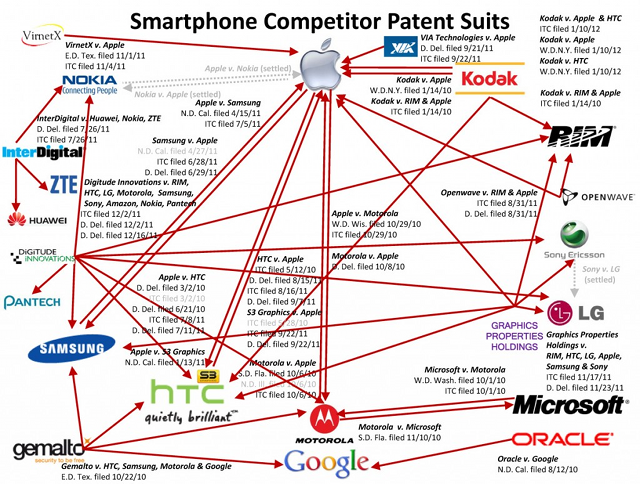
For the average consumer, brands like Apple, Google, and Microsoft dominate the buzz about mobile tech lawsuits with short-term buzz about associated brands like HTC and Samsung popping up occasionally. Consumers hear about the big brands hiring employees to focus on trademark and patent litigation, and a natural progression of human emotion ultimately follows – when people start to root for the underdog. That’s where smaller tech brands can position themselves to carve chunks out of mobile tech market share.
When does trademark and patent litigation shift from protecting a company’s assets and brand equity to bullying and arrogance? Fortunately, social media buzz can help brand’s identify reputation shifts, but operating from a position of brand dominance and leadership often leads to brand arrogance, a topic I’ve written about before for Corporate Eye.
We’ve seen brand arrogance hurt brands in the past with Microsoft offering one of the best examples, but Apple has been heading down the same path of brand arrogance in recent years. Will consumers’ perceptions of the Apple brand (or other brands heading down a similar path) be so tarnished by perceived arrogance that they’ll turn to another brand? Will Apple (and other brands heading down the same path) recognize the problem and fix it before it’s too late?
Only time will tell, but demise by brand arrogance isn’t a new phenomenon. What do you think? Which brand do you think is too far down the path of brand arrogance to save itself? Leave a comment and share your thoughts.