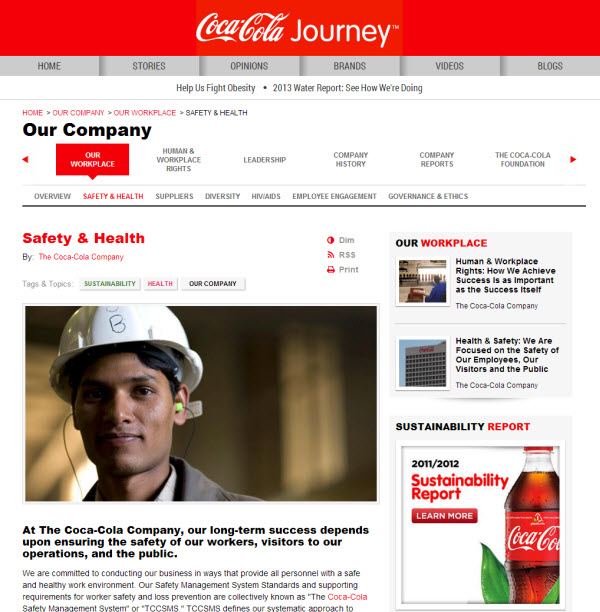
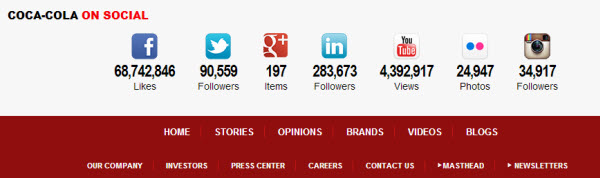
 With a well-maintained blog, and over 68 million likes on Facebook, Coca-Cola shows that they are one of the most popular companies around.
Information about their social media is showcased brilliantly at the bottom of every page on their website, along with icons that double as links to their profiles on Facebook, Twitter, Instagram, and more. Also, Coca-Cola provides a section called “Opinions” that allows users to take part in online debates and conversations, each one having an impressive number of comments below it. This further showcases Coca-Cola’s popularity, and engages the audience.
This display of popularity sets Coca-Cola apart from rival companies in a unique way. Reputation cannot be faked, and Coca-Cola builds trust from the audience by proving their credibility in the online world.