In this post I would like to address things companies can do on their web sites for investors at opposite ends of the age spectrum. As a gross over-generalization, there tends to be a distinct divide between the way younger people and older people expect to receive their information. Younger people (and here I am basing my observations on a subset that runs from my teenaged son through my college aged daughters all the way to my graduate students) want their information NOW and in bite sized snippets. For them, it’s all about instant messaging, twitter and getting the information in small, bite sized snippets before their attention is distracted to something else in their multi-tasked lives.
Older people (and I place myself firmly in this camp) tend to be a bit more patient about receipt of information, but they expect more detail and context in what they do get. This means that they expect more than the 140 characters you get with Twitter. Complete sentences leading to paragraphs and even entire articles are the expected norm.
You obviously can’t serve both needs with the same product or service, but you can build in functionality for both at a reasonable cost.
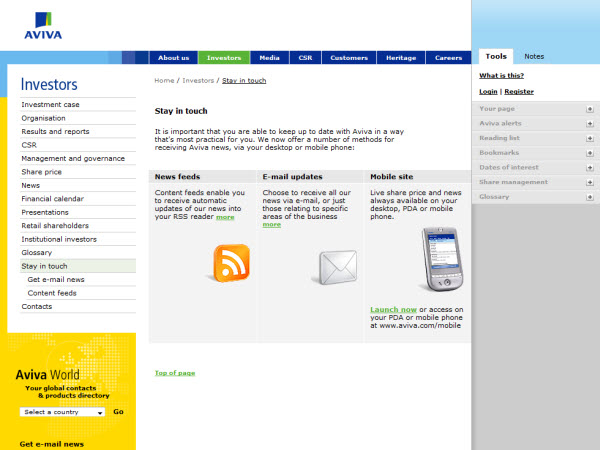
First, for those that need their information immediately, give investors the option to access news and stock prices across multiple electronic formats, ranging from their desktop to their PDA or their mobile. After all, what could be more immediate than getting the news sent right to your pocket?
See Aviva for a good example.
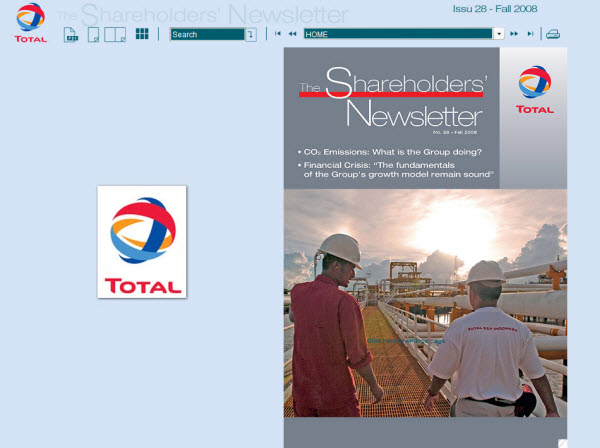
For those investors with more patience and longer attention (and hopefully, investing) spans, companies should consider writing a periodic shareholder’s newsletter. I currently see this only in the largest capitalization stocks, (see Total, right) but with today’s editing software and electronic delivery of the newsletter, it can be achieved quite economically. It certainly gives companies an additional forum with which to deliver their message, in a less structured and more user friendly manner than the mandated regulatory filings. It is certainly worth considering, particularly if it helps attract and retain that elusive beast, the long term individual shareholder.