
 This is the second part of some best practice examples for sustainability websites, drawn from Two Tomorrows’ 2012 Tomorrow’s Value Research report. Part one can be read here.
[Read more…] about Seven Best Practices for Sustainability Websites | Part 2/2
7 Sections for a CSR Website | Part 2 of 2
 This is the second and final part of a post based upon an article from the Network for Business Sustainability. The article addressed seven aspects of business companies need to demonstrate that they have addresses. Part 1 can be read here.
[Read more…] about 7 Sections for a CSR Website | Part 2 of 2
Mixing Oil and Water
 We all have a water footprint; some of us have larger ones than others. (You can assess your personal water footprint here)
Companies also have water footprints, and this will vary across sector: if you’re a services provider, then your footprint will inevitably be smaller than if you use water as part of your operational processes.
Increasingly companies are responding to public interest and awareness of water use by providing information about this on their corporate website.
Water and Responsibility
Some companies make no mention of their use of water at all, while others provide detailed information about their own use, and run CSR campaigns around water issues. Examples of water-oriented programmes include:
- water safety, e.g. the dangers of their reservoirs (Example: United Utilities)
- water leakage (Example: United Utilities)
- environmental conservation (Example: Coca-Cola)
- reduction of use (Examples: IHG plc and British Land)
- provision of clean drinking water (Examples: Proctor & Gamble and Siemens)
- disaster relief in response to flooding (e.g Nokia)
- Reed Elsevier offers a prize as part of their Environmental Challenge programme for innovative ideas to improve access to a safe and sustainable water supply.
There are many more water-oriented programmes, big and small, being run by large companies across the full range of water-related issues, but if you haven’t been to see the SABMiller pages on their Ten Priorities, then you should: look at the water priority page for an excellent example, not forgetting to check all the tabs.
Water and Business Risk
Water scarcity is a significant future risk, and one that is engaging the minds of governments and forward thinkers already. It is also a risk to business, particularly ones which are highly dependent on water operationally. Other water-related risks exist, such as risk of flooding, risk of water pollution and risk of damage to marine environments.
SABMiller have produced a report on water scarcity and business risk. Brewing is highly water-intensive, and so water plays a large part in their business, but water scarcity could be a risk to other businesses too.
Water and Reporting
Because of the highly publicised Gulf of Mexico spill of oil into water earlier this year, I thought it would be interesting to review a corporate site in the oil and gas sector, and see how they approach their water reporting.
I’ve chosen to explore BG Group, which finds, develops and connects natural gas to markets worldwide.
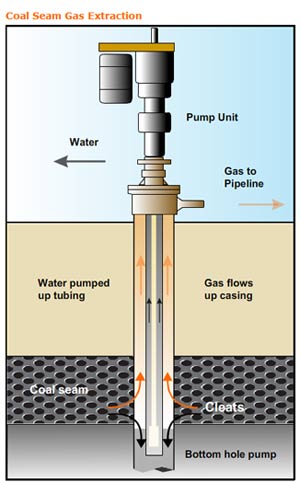
Helpfully, BG Group provide an explanation of how water is used in at least part of their business: to produce coal seam gas, they drill wells, and pump water out of the coal bed, freeing up the gas to flow out of the rock. This isn’t an obvious process to those of us who aren’t in the business, and so this is useful educational material.
BG Group and water: environmental risks
BG Group identify 5 potential environmental consequences of their business activities: 3 of these are water-related:
- the impact of wells, pipelines and other infrastructure on marine ecological habitats and biodiversity
- the release of hydrocarbons or chemicals into water
- use of scarce water resources or the production of excess waste water.
Although water scarcity isn’t explicitly stated as a business risk in the extensive set of risks provided in the Risk section of the online annual report, the risks of oil/chemical spills and damage to the environment are included. And water management has been identified as a material issue.
BG Group and water: environmental strategy
While the unconventional gas resources being developed may be able to reduce the overall greenhouse gas emissions, their production requires careful local environmental protection, including:
- the treatment and disposal or beneficial re-use of salt water produced by coal seam gas wells
- the management of the water used to fracture rock to release shale gas
- the hydro-geological effects of water abstraction and water injection, including the impact on local groundwater sources
BG Group are basing their water measures on UK, EU and US guidelines; their group-wide water management strategy should be available soon.
BG Group and water: operational explanation
BG Group explain that there are three different aspects to their water impact:
- Freshwater withdrawal, that is, water drawn from:
- Surface water (rivers, lakes, wetlands)
- Ground water (via wells and alluvial sands)
- Piped or trucked water from municipal authorities or other industrial users
- Operational use: as input and as output:
Water is used extensively in shale gas wells. To reduce freshwater use, in Louisiana, USA, BG Group have agreed with a local paper mill to reuse waste water from the paper pulp manufacture.
Water is produced in large quantity by coal seam gas wells. This is saltwater, and must be treated or evaporated before it can be used. BG Group are looking at options to reuse this water for local communities in Queensland, Australia, where there has been a prolonged drought.
- Spillage: either of oil into water, or spills of water.
- Oil into water: BG Group report on spillages and indicate the measures put in place to reduce this
- Water loss: again, details explaining the spills are provided.

BG Group and water: Performance
2009 (the most recent report, and the first year the report was available online only) was an interesting year, water-wise, for BG Group, because it included:
- beginning the development of a group-wide water management strategy (target: 2010)
- reporting on freshwater withdrawal for the first time
- increasing the use of water operationally, primarily because of the acquisition of QGC in 2008
- bringing water produced by the Egyptian and the Trinidad and Tobago operations onshore for treatment, to protect the marine environment
- reporting of produced water has changed to be brought into line with the GRI recommendations
- beginning to collate information about environmental training courses in their competency development system.
2009 was clearly a year in which BG Group began to focus on water management. Data on discharges to water – and which type of water – are available online.
It is unfortunate that their operational water use increased, but acquisition of other companies is bound to bring a variety of issues, and water use should be included among these. Interestingly, water management has only recently emerged as a material issue for the group, following their acquisition of other businesses.
The newest acquisition, QGC should be ISO14001 certified (the international standard for environmental performance) by Q1 2011; it will be interesting to see the changes in water use over time as the water management strategy takes effect.
SABMiller: more beer – less water
Overall, I found that the discussion of water use by BG Group was admirably full, clearly presented and informative. It appears that BG Group are taking their corporate impact on our global water resources seriously, and the details on both controlled and uncontrolled discharges to water are also easy to find and clearly stated. The reuse strategies for both input and output water I find fascinating; perhaps there should be more such partnerships established between industries?
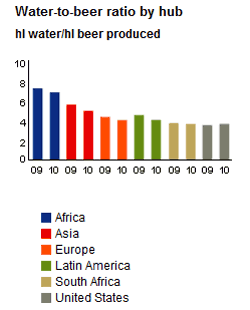
I couldn’t spot any specific water-related targets, and it would be good to see more charts, perhaps something similar to the SABMiller water:beer ratio, to give the visitor an idea of how much water is needed to produce X amount of natural gas. A barrel of oil is a concept that the average visitor – me – can grasp, but a billion cubic feet of gas is more difficult to visualise. How many homes would a billion cubic feet of gas heat for how long?
That said, though, I think this is a commendably detailed approach to reporting on water use by this company, and I look forward to the 2010 report.
What do you think? Could BG Group have done more to report on their impact on our water?

This post is part of Blog Action Day, which this year is discussing water.
Previous contributions to Blog Action Day were:
2009: Climate change and the corporate site
2008: Celebrating the FTSE 100: action on the breadline
2007: Enticing the green investor
Alphabetical Order: More about the Candidate Experience

As noted in the previous post about candidate experience, Peter DeVries offers some interesting suggestions about talent technology in his post on Overcomplicating the Candidate Experience.
Highlights:
Problem 1: “You have a compelling story to share with candidates, but based on the current paradigm with ATS (Applicant Tracking System) providers, you lose much of your ability to tell that story when, where, and how you want to tell the story.”
Solution: “Some ATS vendors have recently begun to implement APIs (Application Programming Interfaces), which enable interaction between the ATS software and other software – in this case your career website.”
Advantage: “APIs allow you to control the presentation of data to candidates, while remaining true to your corporate brand.” And you can even use APIs to “embed Employment Brand and EVP information throughout your job listings, not just on static pages in the Career website.”
Problem 2: “It is difficult to manage and update all of the information spread throughout your career site. Time passes, business moves on, but the content doesn’t – instead, it becomes old and stale, another complaint of job seekers.”
Solution: “Consider using a CMS (Content Management System) to help you take control of the information on your career website.”
Advantage: “A CMS gives you the tools and flexibility to manage how and when content is updated.” For example: “If you have a big win at your organization, you can easily promote that on the home page of your career website – yet again strengthening your Employment Brand.”
So how can you take advantage of these technology tips? Problem 1 is not actually all that easy to address, as it turns out. A quick scan of Gartner’s 2009 Magic Quadrant for E-Recruiting Software (PDF) reveals not much info about this subject. Only HRSmart is noted for its API offering, while the Swiss company netMEDIA gets plaudits for its “integration”capabilities (whatever they may be). Taleo mentions API in promotional literature for its Business Edition, but offers no details.
On the other hand, there are a lot of candidates for solving Problem 2. A complication arises, however. If your company has an Enterprise Content Management system (ECM), it may have or be compatible with Web Content Management systems (WCM). Find out more about this from the trusty Gartner MQ on ECM (PDF). It’s the WCM part you really need for speedy updates to the Careers site, and that functionality may actually be available in the organization—for example, in use by the PR department or Marketing, just not deployed to HR—or might be easily added. If there’s no sort of content management already in place, then the next move is to a standalone CMS/WCM offering. For more info on this option, browse around at CMS Wire.
If it comes down to spending money on solving either Problem—you’ll need to justify the investment. Coming soon: a post on building the business case for a better Careers site.
(Thanks to chefranden for the excellent alphabet block.)
When it all goes wrong in the FTSE 100
Standard 404 Page
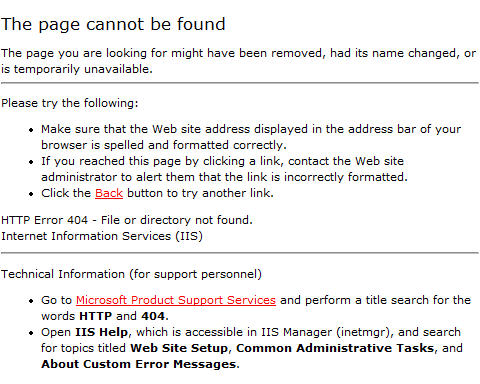
You know how they say you can judge someone by their shoes? It’s often the little things that let us down. FTSE 100 corporate sites tend to be big and complex to match the organisations they serve, but can be seriously underpowered when it all goes wrong.
Being presented with a 404 page is irritating at the best of times, but there are different ways of handling this, and – predictably enough – the FTSE 100 demonstrate the full range of options available.
[Read more…] about When it all goes wrong in the FTSE 100
10 Ideal Gifts for Corporate Communicators
 Suppose you had to buy a present for a corporate communicator; what would you choose?
I know what I’d like, so here are some ideas for your own favourite corporate communicator; but I’d love to hear your suggestions – big or small!
1. For writing
We all have our favourite writing tools, and there is something special about opening a new packet: is their favourite a set of sharp pencils or a decent pen? Red pen or highlighter? Get the tool right, and the words will flow – and even those dedicated to the keyboard need pens or pencils for something. Pair it with a Moleskine, and you’ll have a friend for life.
2. For editing
The latest edition of their favourite style guide, thesaurus or dictionary – one without the coffee rings, broken spine, and turned down corners from when it got ‘borrowed’ by someone else…
I’d like The Global English Style Guide: Writing Clear, Translatable Documentation for a Global Market by John Kohl. Or how about a guide to web content?
3. For optimising
It’s got to be a subscription to ScribeSEO – I find this tool very useful to finetune text for the web, and it’s not just for bloggers. I’m using it as a WordPress plugin, but you can copy any proposed web text into the online tool, and it will come up with suggestions for improving optimisation.
4. For portable web work
An iPad. Need I say more?
5. For keeping going
Lots of coffee! Really good coffee, or a new coffee maker. Even those chocolate-coated coffee beans help, I find…
6. For keeping up with your peers
There’s so much wonderful stuff out there, it’s difficult to keep up with everyone, and it’s easy to get the feeling that you’re missing some key ideas. How about organising a newfangled mixtape: a feedreader set up with your pick of corporate communications blogs, Twitter feeds etc?
(No-one else remember mix-tapes? Oh well…)
7. For keeping up with new channels
A training course for handling social media crises, rather than handling a crisis for the first time in public. Have a look at The Social Simulator; I’m sure you’ll agree that this seems like a great idea.
8. For keeping up with industry trends
A ticket to a big conference that your favourite corporate communicator would just love to go to; get a pair, and you could go together. I’ve really enjoyed the Communicate Magazine conferences this year, but I didn’t get to the Corporate Social Media Summit. Maybe next year?
9. For keeping up with the best
I’ve got to say it: a subscription to our Corporate package, so that your best beloved corporate communicator can see just what their chosen peers and the best in class are doing with their corporate websites: up to date information available online, with gap analysis, criteria analysis and performance analysis, to measure the effectiveness of their online presence.
10. Because we’re worth it
Some time off! Because we all need to recharge our batteries sometime.
So: what’s on your wish list?