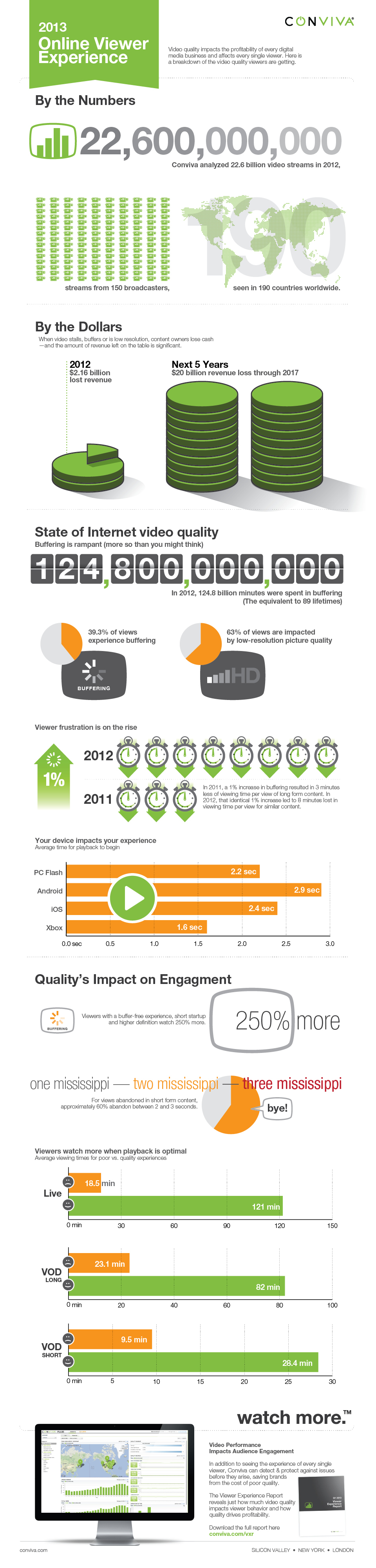
 Brand video is an important part of a content marketing plan, but the opportunity that brand video presents is significantly reduced if the quality of those videos is low or the viewer experience is damaged from buffering and slow load times. Specifically, video buffering or low resolution video lead to $2.16 billion in lost revenue for online video publishers in 2012.
That figure comes from the Conviva Viewer Experience Report, but the $2.16 billion loss is just a drop in the bucket compared to how much revenue will be lost due to video buffering and low quality in the next five years. By 2017, the revenue loss is expected to reach $20 billion.
Conviva studied 22.6 billion video streams in 2012 from 150 broadcasters which were seen in 190 countries around the world to create its Viewer Experience Report. From its research, Conviva found that 124.8 billion minutes were spent in video buffering. Nearly four out of ten views experienced buffering and nearly two out of three views were impacted by low-resolution in 2012.
All of that buffering and low quality is having a direct effect on consumers. In 2012, the 1% increase in buffering led to an eight minute loss of viewing time per view of long form video content. For short form video content, approximately one out of two viewers abandoned videos between two and three seconds. On the opposite end of the spectrum, viewers who didn’t experience buffering or low quality in the videos they watched were found to watch 250% more video content.
The infographic from Conviva shown below provides many of the highlights from the study.
Botton-line, brand video is a great marketing tool, but if the quality isn’t excellent, you won’t get the results you want and need.
Image: Julien Boulanger