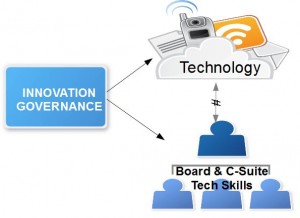
 Two key components of innovation governance are:
- the technology that drives innovation
- and Boards and C-levels who are responsible for strategy and governing the decisions regarding innovation and technology.
Technology is always changing. The problem is a Board technology knowledge gap and this leads to ineffective technology strategy.
According to the Kellogg School, 75% of executives aren’t confident in the value of their technology investments, 70% of IT projects deliver disappointing results and 35% of projects fail outright. These numbers are staggering and make it clear to me that boards are missing the mark when it comes to providing technology oversight.
In a past post I reviewed the importance of the Board and C-Levels to effective innovation governance. But, how is the Board and senior managers to lead innovation governance if they don’t have technology skills? Simply put, they will not be able to do it well. They don’t need to be geeks but there is a need for some awareness of technology trends and how these might influence the performance of the enterprise.
Deloitte Consultants in their Tech-Intelligent Board (PDF) report say:
Few Boards devote attention to IT (Information Technology). Many would like to do more. The question is how?
There are company Boards that have answers to this question. I will list a brief summary (from a variety of sources such as McKinsey and Deloitte consultants, Harvard Business Review, CIO magazine and others) and will expand on these in future posts.
- Annual technology reviews, good but need to be more frequent
- Hire new Board members with technology backgrounds
- Set up a Technology Advisory group
- Set up a Board Technology Portal that is easy to use and sends reminders to revisit
- Have the CIO brief the Board at least once every three months
- Use reverse mentoring to have new technology savvy employees to brief Clevel executives (my favorite)
More to follow.