 In recent years, the term “showrooming” has taken on a negative meaning for brick-and-mortar retailers as more and more consumers visit physical stores to research products but then go online to purchase those products at a lower price.
Some consumers even visit a brick-and-mortar retailer with their mobile devices to price check products in the store and through online sellers. They can instantly purchase the item they want based on their showrooming research from the online seller with the best price before they even leave the store.
What’s a brick-and-mortar retailer to do?
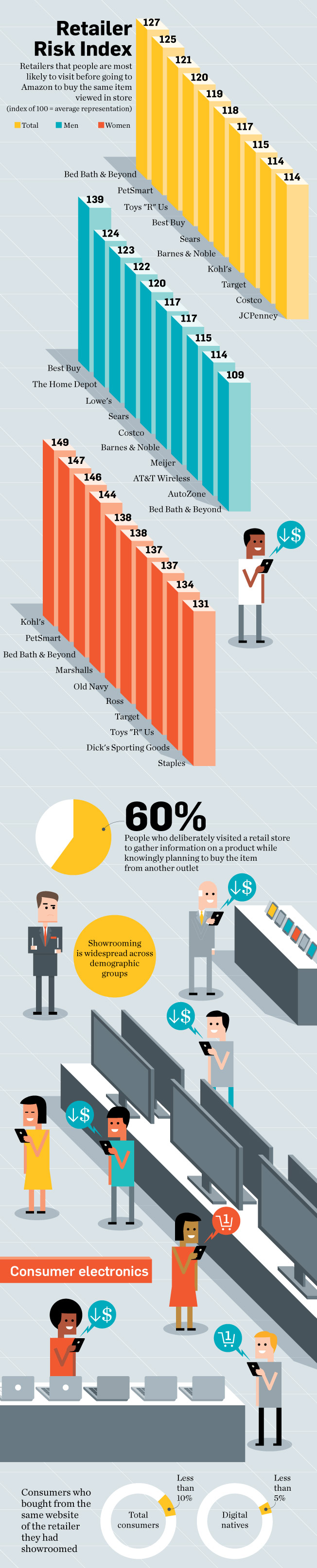
According to research from Gartner and Placed (a mobile analytics company), showrooming is poised to become a much bigger problem, as you can see in the infographic published by AdWeek below. Here are a few highlights to get you thinking:
- 60% of consumers deliberately visited a brick-and-mortar store to gather information on a product while knowing they planned to buy that product from another outlet.
- 90% of consumers who showroomed a product at a brick-and-mortar retail location did not purchase the item from that retailer online.
- The top five stores that consumers are likely to visit before going online to purchase the products they showroomed at a brick-and-mortar location are: Bed Bath & Beyond, PetSmart, Toys ‘R Us, Best Buy, and Sears.
The top reasons consumer cited for showrooming are:
- Better prices online
- The store was out of stock
- The store didn’t carry the product
- Online shopping is more convenient/free shipping
The challenge for retailers is finding a way to increase in-store sales. So far, retailers have fought back with price-matching, faster checkout, same day free shipping on orders placed from the brick-and-mortar store, and in-store wi-fi access that enables mobile scanning so consumers can instantly purchase popular items and have them shipped to their homes for free. Each of these tactics aims to help consumers get the lowest price and bypass the checkout line.
For brick-and-mortar retailers, it’s more important than ever to have the right products stocked at the right prices. Bargain hunting and comparison shopping is at consumers’ fingertips, so retailers need to make sure consumers can get what they want, when they want it. If brick-and-mortar retailers fail, those consumers will head directly to Amazon or another online retailer to make their purchases.
What do you think?
Image: Alton Jefferson II