A study by WPP of 17,000 search engine users reveals quite a bit of information about search engine brand loyalists. The complete report will be released later this month, and is certain to bring some interesting insight that could help advertisers connect with more targeted audiences.
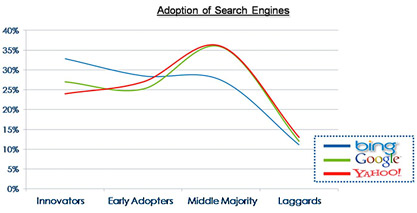
For example, take a look at the chart above which shows that innovators and early adopters are most likely to use Bing as their preferred search engine. Given that Bing is the newest search engine of the top three, this finding isn’t shocking. However, the study also reveals that Bing users are more likely to shop at Walmart than any other search engine users while Google users shop at Target and Amazon. Also, Yahoo! users choose AT&T and Sprint as their wireless providers more than other search engine users. It’s these pieces of information that advertisers are likely to eat up!
Here are a few highlights that show how demographic and behavioral attributes vary online based on the search engine people choose:
- More likely to shop at Target and Amazon
- More likely to book flights online at JetBlue.com
- More likely to make travel reservations on HotWire
- More likely to research the Lexus car brand
- Tend to be the “average consumer”, conventional but open to trying new things, rule followers
Bing
- More likely to shop at Walmart
- More likely to research the Toyota car brand
- Tend to be middle-aged, highly educated, tech-savvy
Yahoo!
- More likely to choose AT&T or Sprint as wireless providers.
- Tend to be 55-years of age or older, reserved, less independent, skeptical about future and about trying new things
AOL
- Tend to be 55-years of age or older, less intellectual than peers, responsible spenders, use dial-up modems, pessimistic about future
But that’s not all! The study will also reveal how people who prefer different search engines are more or less likely to actually make purchases on the Web sites they find. That’s a connection many marketers may not have realized existed, and it can certainly help advertisers.
What do you think about these study results?
Source: AdAge.com
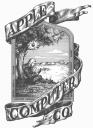
The original Apple logo was created by one of the lesser-known founders of Apple Computer Co., Ronald Wayne. It’s hard to even notice the apple hanging from the tree above Sir Isaac Newton’s head in this image. The text that borders the image (which is too small to read at any size) reads, “Newton… A Mind Forever Voyaging Through Strange Seas of Thought … Alone.” It’s not surprising that this logo only lasted a year as the primary tangible symbol of the Apple brand. There is really nothing positive that you can say about it in terms of branding a technology company.
The rainbow apple is the logo that most consumers saw in their introduction to the Apple brand. Apple brand champion Steve Jobs, himself, hired graphic designer Rob Janoff of the Regis McKenna Advertising Agency to design the new logo, and the final design chosen — the rainbow apple — worked. According to some reports, Janoff has claimed the bite taken out of the apple was intended to show people that the image was an apple, not a tomato, and it was a play on words between “bite” and the technical term “byte”.
One year after Steve Jobs returned to the helm of Apple (after he was ousted from the company years earlier), he called for a logo update, and what came out of this redesign was a color change from the dated rainbow palette to a modern monochromatic version that was also highly web-friendly. The primary color for this Apple logo, which is still used today, is chrome, but it has appeared in other colors as well. In a word, the new logo was sleek and matched the new direction Jobs planned to take the company. The monochrome Apple logo has even been reported as stimulating the brain and making people who are exposed to it more creative (according to a
Earlier this month, I wrote an article that was published on Entrepreneur.com where I listed
Are all brands global? That’s a question we could have answered easily a decade or two ago, but today, it’s not as simple. With the growth of the social Web, tools like blogs, Twitter, Facebook, YouTube, and so on make the global conversation immediate. Could it be argued that because of the power of the social Web in terms of spreading information wider and faster than ever, all brands are global by default simply because they have the potential to get in front of a global audience?
Building a successful brand takes time. There are no easy routes to success or shortcuts to save time. You might get lucky and garner widespread awareness and attention for your brand, but successful brands depend on customer loyalty. There are no shortcuts to developing relationships with consumers, creating expectations for your brand, and meeting those expectations through every customer touch point.