 Crowdsourcing isn’t just for raising money for startups and personal projects anymore. Today, crowdsourcing is an important part of brand marketing. Not only can you crowdsource content for your brand’s blog, Facebook Page, and so on, you can also crowdsource for marketing campaigns.
Many brands are having great success using crowdsourcing as an integral part of recent marketing campaigns. Two excellent examples are discussed below—Coca-Cola and Bic.
Coca-Cola Happiness Flag
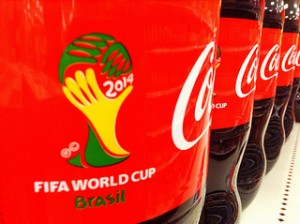
In the months leading up to the 2014 World Cup in Brazil, Coca-Cola launched a campaign to create the Coca-Cola Happiness Flag. The flag would be created as a mosaic of photos submitted by people around the world. Artists would use these images to create one giant flag. Together, the photos would look like a single, large image, but up close, all of the individual photos would be visible. Ultimately, people from over 150 countries submitted photos to the HappinessFlag.com website, and millions of photos are included in the final flag, which includes over 3600 square meters of printed material.
Coca-Cola’s strategy was to involve as many people in the campaign as possible. On the day the flag was revealed at the 2014 World Cup, everyone who submitted a photo received an email message so they could see their photo in the actual flag and as well as a digital version of the flag on the website. This way, Coca-Cola hoped to involve everyone in the final results of the project both physically and digitally, even if they couldn’t be in Brazil to see the flag in person.
The video was created earlier this year to drive excitement for the campaign.
Bic Universal Typeface
Bic launched its own crowdsourced marketing campaign this year to promote hitting a company milestone by producing 100 billion Cristal Ballpoint Pens. As the best-selling pen, Bic suggests that it could be called the “universal pen,” and if it a pen can be universal, Bic asks what a universal handwriting would look like.
To find out, the company launched a website, TheUniversalTypeface.com, and invited people to enter their handwriting using a smartphone or tablet touchscreen with Mobile Connect technology to help Bic create the Universal Typeface. Each handwriting submission was run through an algorithm that calculates average based on statistical differences and similarities. The results are then aggregated to create the Universal Typeface, “one ever-changing, always evolving font,” which will will be downloadable in August. To date, people from 76 countries have submitted writing samples to the website.
The video below was developed to promote the campaign.
As Bic and Coca-Cola demonstrate, crowdsourcing can be very effective in building content and generating buzz. Don’t be afraid to get creative in leveraging crowdsourcing for your brand marketing.
Image: Mike Mozart licensed CC BY 2.0