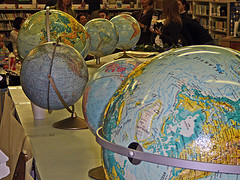
 Are all brands global? That’s a question we could have answered easily a decade or two ago, but today, it’s not as simple. With the growth of the social Web, tools like blogs, Twitter, Facebook, YouTube, and so on make the global conversation immediate. Could it be argued that because of the power of the social Web in terms of spreading information wider and faster than ever, all brands are global by default simply because they have the potential to get in front of a global audience?
It’s an interesting concept to consider. Brands that once had no intention of becoming global in the short term might find themselves on a global stage simply through a popular blog post or tweet. And that means brand managers have a global image and messaging responsibility, whether they want one or not.
Even small business brands can become global brands thanks to the conversation and sharing of information that happens on the social Web, so it stands to reason that corporate-backed brands shouldn’t just wonder if the same could happen to them. Instead, they should expect that it will happen to them and plan accordingly. That means your brand strategies should be positioned to speak with a global audience now. Consider how your brand promise, messages, and image will translate in front of a global audience now before you find yourself in an unfavorable position at the hands of a social Web conversation.
Many brand managers dream of the day that one of their messages goes viral and spreads around the world bringing more word-of-mouth marketing and online buzz than they could ever have hoped for. But what if that word-of-mouth marketing and online buzz happens and you’re not ready for it? What if your brand suddenly ends up in the spotlight of the global stage? It could happen. Are you ready?
Do your brand promise, image and message translate to a global audience? It’s time to ensure that they do.
Image: Flickr