
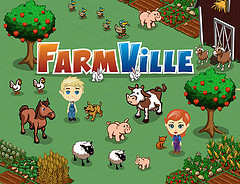
 A lot has changed since the days when Second Life was the cool online game. Today, social games are integrated into top social networking sites and have created a new avenue for brands to connect with consumers. In fact, according to eMarketer, 1 out of 2 U.S. Internet users between the ages of 18-44 play social games every day, and U.S. social gaming revenues will pass $1 billion in 2011.
Research from Saatchi & Saatchi and Ipsos OTX MediaCT tells us some more about the people who play online social games daily:
- 54% of men play social games daily.
- 46% of women play social games daily.
- 66% of tablet owners play social games daily.
- 53% of smartphone owners play social games daily.
- 14% of people who play social games do so at work for at least one hour each day.
- 2 out of 5 social game players prefer to receive new product information via social games (that’s lower than e-mail but much higher than traditional advertising).
One of the most important takeaways from the research is this — players like “social challenges features of the games they play.” In order to get the best results from brand integration into social games, consider how you can integrate your brand as part of a social challenge. The research offers the following statistics:
- 57% of respondents believe that product discounts are a “very compelling” incentive to complete a social challenge.
- 37% of respondents believe that product discounts are a “somewhat compelling” incentive to complete a social challenge.
- 88% of respondents believe that loyalty programs are at least “somewhat compelling” incentives to complete a social challenge.
- Challenges that can result directly in social action were also found to be compelling incentives for many social game players.
- 33% of respondents believe that challenges which result in changes to a player’s status in the community were not compelling incentives.
The important thing to understand is that people are using social games and they are open to receiving brand messages and experiences on social games as long as those brands add value to the overall gaming experience. The worst thing you can do is interrupt players with your branded messages. Instead, enhance the user experience. Of course, that means you need to spend a significant amount of time actually playing the game and learning about the community of players before you can truly integrate your brand in an effective manner. That’s a big step that is too often skipped.
Image: Flickr

Susan Gunelius is the author of 10 marketing, social media, branding, copywriting, and technology books, and she is President & CEO of KeySplash Creative, Inc., a marketing communications company. She also owns Women on Business, an award-wining blog for business women. She is a featured columnist for Entrepreneur.com and Forbes.com, and her marketing-related articles have appeared on websites such as MSNBC.com, BusinessWeek.com, TodayShow.com, and more.
She has over 20 years of experience in the marketing field having spent the first decade of her career directing marketing programs for some of the largest companies in the world, including divisions of AT&T and HSBC. Today, her clients include large and small companies around the world and household brands like Citigroup, Cox Communications, Intuit, and more. Susan is frequently interviewed about marketing and branding by television, radio, print, and online media organizations, and she speaks about these topics at events around the world. You can connect with her on Twitter, Facebook, LinkedIn, or Google+.


Enjoyed the post, Susan.
This is true, that consumers are getting much smarter and simply placing your brand in a game is not enough and will be overlooked if it doesn’t add value for the player.
We’re very excited about launching @festivalsgame on Facebook, where players build and manage their own music festival, place their favourite bands on their “stages” and listen to their music being streamed in from 7Digital. The explicit interaction with bands is something we hope will foster fan loyalty and, using recommendations based on the users’ tastes, will help music discovery. Your feeedback on the idea or our early concept video http://bit.ly/musfestgame would be appreciated!